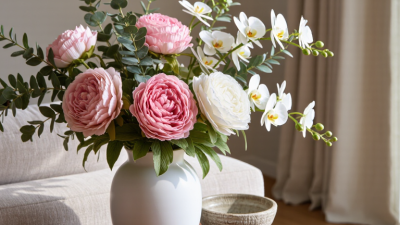
Artificial flowers are no longer just dusty arrangements on a high shelf. Today, realistic petals, flexible stems, and varied materials make them useful in busy homes, from dim hallways to sunny dining tables. The market is growing, too. Grand View Research’s Artificial Flowers Market Size, Share & Trends Analysis Report estimated a 5.5% compound annual growth rate for 2024–2030. That figure describes market growth, not product quality. Still, it suggests shoppers have more choices—and more reason to compare carefully.
For Artificial Flowers For Home Decoration, appearance is only part of the decision. Check the color in daylight, feel whether the fabric looks convincing, and inspect how the stems hold their shape. A peony that looks lush online may arrive with flat petals. It happens. Room scale matters as well: a tall arrangement can crowd a narrow console, while a few lifelike stems may suit it better. Think about dust, cleaning, sunlight, and how often you want to rearrange the display. Product descriptions can help, but they rarely show every flaw. Slightly uneven petals may even look more natural than perfect repetition. This guide offers 10 practical tips for judging materials, proportions, color, care, and value before you buy. Some choices are subjective. Your room will tell you.
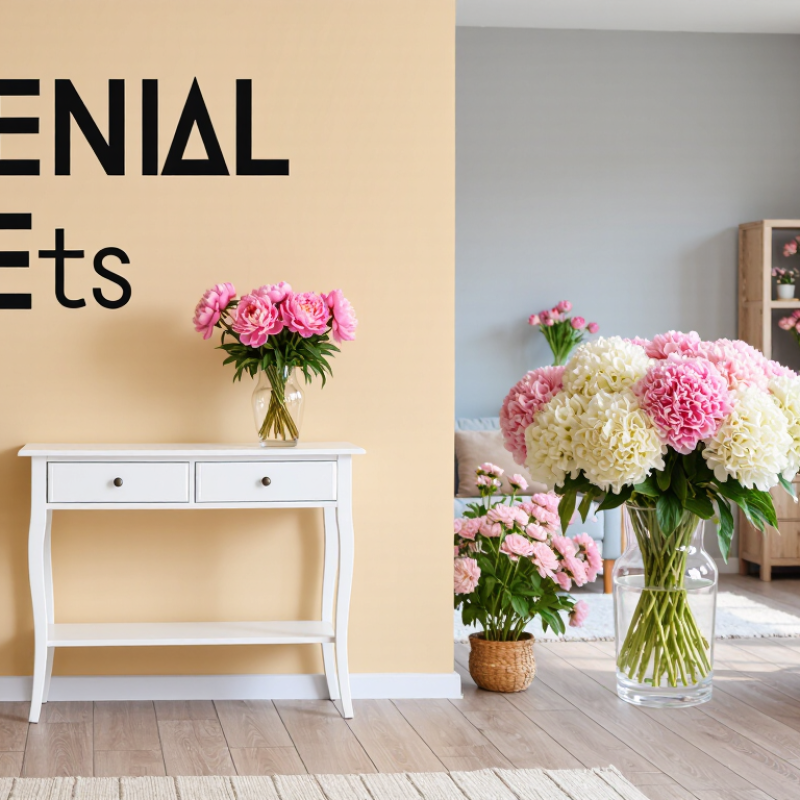
Artificial flowers are made from materials such as silk-like fabric, polyester, foam, or molded plastic. Their purpose is not to imitate every detail perfectly. They offer lasting color and shape where fresh flowers may be impractical, such as a sunny windowsill or a room with little natural light. They do not wilt. That matters in busy homes, but permanence has trade-offs.
A convincing arrangement depends on more than color. Look closely at petal edges, leaf veins, stems, and the way light falls across the surface. In a living room, soft fabric petals may feel warmer than glossy plastic. A small bunch of pale stems can brighten a narrow entry table without blocking keys or mail. Scale matters, too: oversized blooms can overwhelm a small shelf, while delicate stems may disappear beside a deep sofa.
Artificial flowers still need care. Dust gathers between petals, especially near radiators and open windows, so gentle cleaning helps them look fresh. I have found that a slightly uneven arrangement often feels more natural than a perfectly matched bunch. Still, some artificial foliage looks too polished up close. That can be disappointing. Consider where people will view it, and choose pieces whose texture suits both the room and the distance.
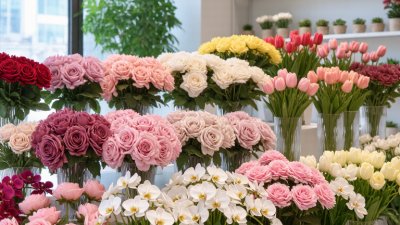
Use this proportion as a starting point when choosing artificial flower stems: a common design guideline is to make the total arrangement about 1.5 times the vase height. For example, a 30 cm vase pairs with an arrangement around 45 cm tall. Adjust the proportion to suit your room, display location, and personal style.
When choosing artificial flowers, inspect the material in daylight, not only under warm shop lighting. Polyester petals often hold crisp folds and resist creasing, while silk-like fabrics can look softer but may show frayed edges. Textile Exchange’s Materials Market Report 2024 says polyester made up about 57% of global fiber production in 2023. That figure describes the wider textile industry, not artificial flowers alone, but it helps explain why polyester is common. Feel the petals: thin, slippery fabric can appear shiny and flat.
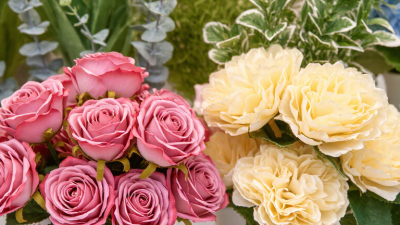
Craftsmanship shows in small details. Check whether petals overlap naturally, whether the flower head hides its central attachment, and whether wire stems bend without exposing sharp ends. Look closely. A little variation in petal size and color usually feels more convincing than identical, rigid blooms. Grand View Research estimated the broader artificial plants market at about $1.7 billion in 2023; its category includes more than cut flowers, so treat it as context, not a quality measure.
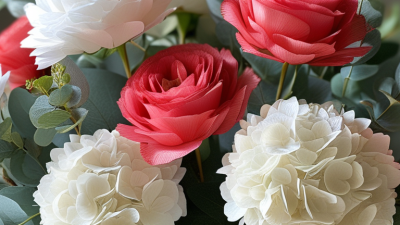
For a natural appearance, compare the arrangement with real flowers of the same type. Look for gentle color shifts near the petal base, matte surfaces, and leaves with visible veins. Smell will not help. I still find some premium-looking blooms too glossy beside a window, so test one sample at home before buying a full arrangement. Dust can settle in layered petals; choose designs you can clean with a soft brush.
Color works best when it echoes something already in the room. For a calm, neutral interior, try soft ivory ranunculus, muted eucalyptus, or dusty peach stems. In a room with navy walls or dark wood, richer burgundy and rust can add warmth without competing. Grand View Research estimated the global artificial plants and flowers market at about US$1.6 billion in 2023. That growth suggests plenty of choices, but more options do not guarantee a natural-looking arrangement. Keep it restrained. Match the flower’s overall tone to a cushion, artwork, or rug, rather than copying every accent color.
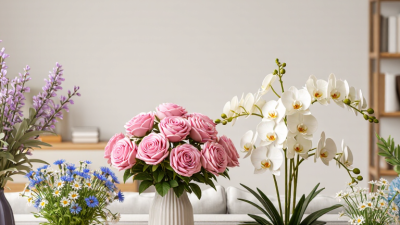
Style matters as much as color. A few sculptural stems suit clean-lined rooms, while loose branches and varied blooms feel more at home in rustic or cottage-inspired spaces. Check the finish in daylight: shiny petals can look convincing in a dim corner but artificial beside a bright window. Test it first. Pay attention to scale, too. A tall vase with small flowers may look unbalanced on a broad dining table, while one oversized bloom can overwhelm a narrow shelf. It is easy to over-coordinate; a slightly imperfect mix of shapes often feels more lived-in.
| Tip | What to Consider | Color and Style Guidance | Suitable Placement |
|---|---|---|---|
| 1. Match the room’s color palette | Identify the main colors in the walls, furniture, rugs, and accessories before choosing flowers. | For a calm look, choose flowers in a similar color family. For contrast, use one accent color already present in the room. | Living rooms, bedrooms, and entryways |
| 2. Coordinate with the interior style | Consider whether the room is modern, traditional, rustic, coastal, or eclectic. | Simple sculptural stems suit modern rooms; garden-style bouquets work well with traditional or cottage-inspired interiors. | Rooms where flowers should reinforce the existing decor |
| 3. Choose a scale that fits the space | Compare the arrangement’s height and width with the table, shelf, or floor area where it will sit. | Use a low, compact arrangement on a dining table and taller stems in a floor vase or a spacious corner. | Dining tables, consoles, shelves, and empty corners |
| 4. Look for believable color variation | Real flowers often have subtle changes in tone across petals, leaves, and stems. | Choose natural-looking shades and soft tonal variation rather than uniformly bright petals or overly glossy foliage. | Close-up display areas, such as coffee tables and bedside tables |
| 5. Consider the material and finish | Artificial flowers may use fabric, molded materials, or a combination of materials. | Matte finishes and detailed petals often blend easily into home decor; inspect leaves and stems as well as the flowers. | Any room, especially areas viewed at close range |
| 6. Balance the arrangement with the vase | Check that the vase opening, height, and visual weight suit the stems. | Pair delicate flowers with a simple vase. Use a sturdy, wider vase for tall or fuller arrangements. | Tables, mantels, entry consoles, and open shelves |
| 7. Use a restrained accent color | Decide whether the flowers should blend into the room or act as a focal point. | In a neutral room, a small group of muted yellow, blue, or blush blooms can add color without overwhelming the space. | Neutral rooms or areas that need a visual focal point |
| 8. Think about the light in the room | Artificial flowers do not need sunlight, but natural and indoor lighting can change how their colors appear. | Check the arrangement under the room’s lighting. Very dark foliage may appear heavier in dim corners. | Rooms with limited daylight, hallways, and shaded corners |
| 9. Keep patterns and textures in balance | Take nearby upholstery, wallpaper, and decorative objects into account. | Use a simpler arrangement in a room with busy patterns. Fuller or more textured flowers can add interest to a plain space. | Patterned living spaces, reading nooks, and minimalist rooms |
| 10. Choose flowers that are easy to maintain | Artificial arrangements need occasional dusting and may need reshaping after storage or transport. | Select stems that can be gently adjusted to suit the vase and display. Follow the care instructions provided with the item. | Frequently used rooms and displays that are difficult to reach |
Artificial flowers look convincing when their scale fits the room. For a narrow bedside table, try a small bunch in a low vase; tall stems can crowd the lamp and feel awkward. On a dining table, keep the arrangement below eye level so guests can talk across it. Measure the vase and the available surface before buying. A stem that seems modest in a shop may look oversized at home.
Think about shape as well as height. A loose arrangement with a few stems at different angles often looks more natural than a tight, perfectly even dome. Trim or bend stems gradually, then step back and check the silhouette. I once placed a wide arrangement on a slim console, and it looked unbalanced from the doorway. Moving it to a broader shelf helped, though one stem still seemed too bright. That small mismatch bothered me more than expected.
Choose display locations with light and daily use in mind. A shaded entryway can benefit from a lively color, while a sunny windowsill may fade some materials over time. Keep flowers away from spots where sleeves, doors, or pets will brush them. Try the arrangement in place for a day before settling on it. Notice the view from the room’s entrance, not just from the chair beside it.
Artificial flowers need gentle care to keep their color and shape. Dust them every week with a soft makeup brush or a clean microfiber cloth. Work from the top of each stem downward, supporting delicate petals with your free hand. For heavier dust, use a cool hair dryer on its lowest setting, held at a distance. Never use hot air; it can warp plastic parts or loosen glued details. A little patience helps.
Tip: Check the care label before using water. If the flowers are washable, rinse them briefly with cool water and let them air-dry completely. Avoid soaking fabric blooms, which may lose their shape or color. Test any cleaning method on one hidden leaf first.
Keep arrangements away from sunny windows, radiators, and damp corners. Strong sunlight can fade petals over time, while excess moisture may leave spots or encourage mildew on fabric. Rotate the vase occasionally so one side does not fade faster. Store seasonal arrangements in a lidded box, with tissue loosely cushioning the flowers. I still miss a leaf now and then during cleaning; a final look at the stems catches most of the dust.